

I recently had the opportunity to read Benjamin Franklin’s Autobiography, which consists of four parts covering his life from his youth in Boston to his later years as a statesman. Part two, while slowing the faster-paced narrative, offers Franklin’s reflections on his moral philosophy, particularly his system of virtues. Here, Franklin outlines thirteen virtues he holds in highest regard and describes his methodical process for implementing and improving upon them.
Below are the thirteen virtues Franklin lists, with each one accompanied by a precept to clarify its meaning:
- Temperance: Eat not to dullness; drink not to elevation.
- Silence: Speak not but what may benefit others or yourself; avoid trifling conversation.
- Order: Let all your things have their places; let each part of your business have its time.
- Resolution: Resolve to perform what you ought; perform without fail what you resolve.
- Frugality: Make no expense but to do good to others or yourself; i.e., waste nothing.
- Industry: Lose no time; be always employ’d in something useful; cut off all unnecessary actions.
- Sincerity: Use no hurtful deceit; think innocently and justly, and, if you speak, speak accordingly.
- Justice: Wrong none by doing injuries, or omitting the benefits that are your duty.
- Moderation: Avoid extremes; forbear resenting injuries so much as you think they deserve.
- Cleanliness: Tolerate no uncleanliness in body, clothes, or habitation.
- Tranquility: Be not disturbed at trifles, or at accidents common or unavoidable.
- Chastity: Rarely use venery but for health or offspring, never to dullness, weakness, or the injury of your own or another’s peace or reputation.
- Humility: Imitate Jesus and Socrates.
Recognizing the difficulty of achieving moral perfection, Franklin devised a systematic approach to cultivate these virtues. Deciding that attempting to master all thirteen simultaneously would be vain, he focused on one virtue per week, cycling through the list four times a year. To track his progress, he created a small book with a page for each virtue, divided into a grid with seven columns (one for each day of the week) and thirteen rows (one for each virtue). Each evening, he would mark a black dot in the appropriate cell if he committed a fault against that virtue during the day. His goal was to keep each virtue’s row clear of marks before moving to the next.
Of the many angles I could have explored to discuss Franklin’s virtues, one really got me thinking: Virtue 13.
First, however, it’s interesting to note that over the course of Franklin’s career, he was not widely regarded as humble. His public persona—marked by confidence, wit, and a penchant for self-promotion—often conveyed hubris. A telling anecdote from the autobiography underscores this perception:
“My list of virtues contain’d at first but twelve; but a Quaker friend having kindly informed me that I was generally thought proud; that my pride show’d itself frequently in conversation; that I was not content with being in the right when discussing any point, but was overbearing, and rather insolent, of which he convinc’d me by mentioning several instances; I determined endeavouring to cure myself, if I could, of this vice or folly among the rest, and I added Humility to my list, giving an extensive meaning to the word.”
An admirable action indeed, but I digress.
So why did humility of all virtues stand out? First, a delineation of virtue is in order, and for that, we turn to Aristotle, the principal virtue ethicist, and his Nicomachean Ethics. Aristotle defines a virtue as a disposition to act in accordance with the “golden mean”—the balanced midpoint between excess and deficiency. For Aristotle, virtues are habits that enable individuals to achieve eudaimonia, or a flourishing life. A virtue, such as courage, lies between the extremes of recklessness (excess) and cowardice (deficiency). The purpose of this is to cultivate a life of balance, reason, and fulfillment, where individuals thrive by aligning their actions with moral excellence.
Now, let’s revisit the virtue that particularly resonated with me: Franklin’s addition of humility. Among Aristotle’s twelve virtues, such as courage, temperance, and justice, one that touches on humility is magnanimity (greatness of soul). Magnanimity involves a balanced sense of self-worth, neither overinflated pride nor excessive self-deprecation. Interestingly, Aristotle considers absolute humility, or at least some sense of the word, a vice of deficiency. Pusillanimity, to be precise, where one denies their worth entirely, undermines the confidence needed to act virtuously and achieve greatness, like a scientist refusing to publish a groundbreaking innovation to evade praise. Conversely, vanity is also a vice, as it leads to an arrogant disregard for others. Aristotle’s view of humility aligns with modern perspectives to some extent. Extreme pride is often taboo, associated with arrogance or narcissism, yet radical humility—completely negating one’s self—is also considered detrimental.
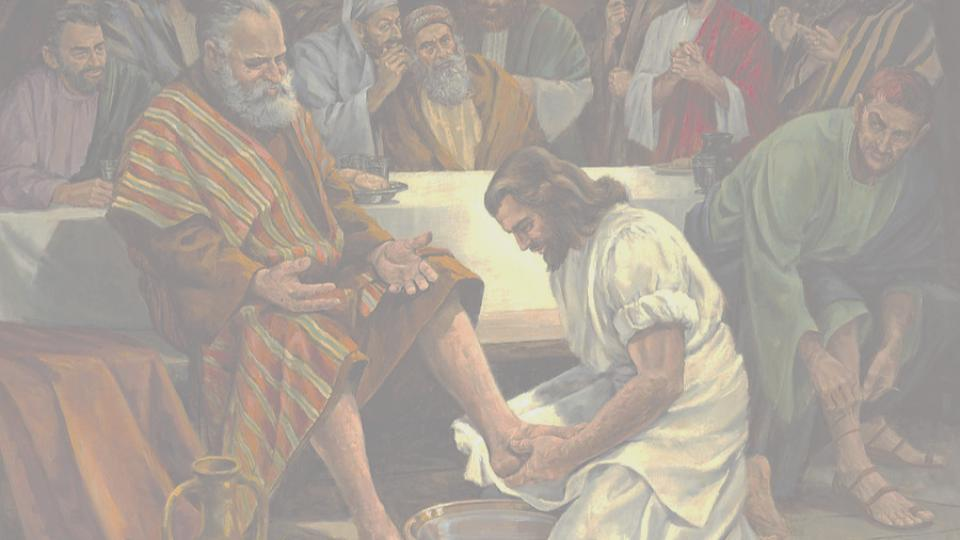
Now here’s the kicker: when Franklin lists Humility as his final virtue, he doesn’t just define it, he follows with, “Imitate Socrates and Jesus.” Two towering figures in history. Both renowned for their humility, both sentenced to death. Socrates, who questioned everything and claimed to know nothing, was executed for “corrupting the youth” and defying the religious status quo. Humility goeth before a fall. Jesus, who preached love, mercy, and turned the other cheek, was crucified for his quiet challenge to worldly authority. Humility goeth before a fall. Of all the examples Franklin could have chosen, he points to two men whose humility didn’t lead to success, but sacrifice. So it begs the question: what’s the utility of humility?
I’ve chosen to refrain from delving too deeply into the supposed utility of humility. After all, the adage “pride comes before a fall, ” suggests that humility is the more secure path. But I would argue otherwise, at least concerning the proverb’s colloquial interpretation rather than its proper context. Pride, in many forms, can elevate you. It can fuel confidence, command respect, and drive ambition. It did so for Franklin. But humility? Humility can mean stepping back when you could step forward. It can mean letting others speak louder, claim credit, or take the spotlight. It can cost you time, recognition, and opportunity. The pretentious are lurking. Still, maybe a utilitarian or even a deontological case can be made, and I’m not arguing it can’t. But the counterargument may be just as strong: pride, well-crafted and well-placed, often wins in the world we live in. So why be humble? It’s a question too large for now. Every answer opens another question. Every scenario ushers in a competing one. What about ironic pride? Am I never to speak of myself? Never to feel accomplished? Never to celebrate a win? Such is a rabbit hole I choose—for now—not to fall into. A proper definition of humility would certainly need to be in place, for I don’t believe it shares a connotation with pusillanimity (smallness of soul)—the deficiency vice of Aristotle’s magnanimity. Perhaps a definition, or better yet a reason for humility, will offer itself in my closing analysis, for all I can say now is this:
Humility is not of this world. A radical laying down of one’s pride, self-image, and gratification, for the exalting of others or your Creator, is an act not of this world. Pride, too, is not of this world. An exalting of oneself for gratification, despite others or your Creator, is likewise an act not of this world. Hence, they are each taboo. For what is of this world—and the prosperity that may follow—seems to lie somewhere in the middle. But even so, pride, in its most militant and malicious forms, will find its way to us from that distant realm. And with it comes the destruction of others and one’s soul. But just as pride can make its way to us, representing one end, so too can humility flow through us, representing the other. Humility and pride transcend this world, locked in a timeless war beyond it. One may thrive by calling for a ceasefire, tactfully balancing the two propping up others and oneself in courtly fashion. But to humble oneself, such acts don’t go unnoticed. And they point to that world not of our own.
Because of this, humility goeth before a fall. It did for Socrates. It did for Jesus.
There’s an irony in seeking a personal gain in humility. If that’s your reason for doing so, then it’s probably not humility. As such, there may very well not be a single tangible benefit to being humble, in all likelihood, the contrary—humility goeth before a fall.
But in the act, as you fall, something else must necessarily rise: be it Truth, be it others, or be it Christ above.
Such is the essence and reason for humility.
References:
- Aristotle, & Sachs, J. (2002). Nicomachean Ethics. Focus Pub./R. Pullins.
- Franklin, B. (2015). The autobiography and other writings. Everyman’s Library, Alfred A. Knopf.
- King James Version Bible