

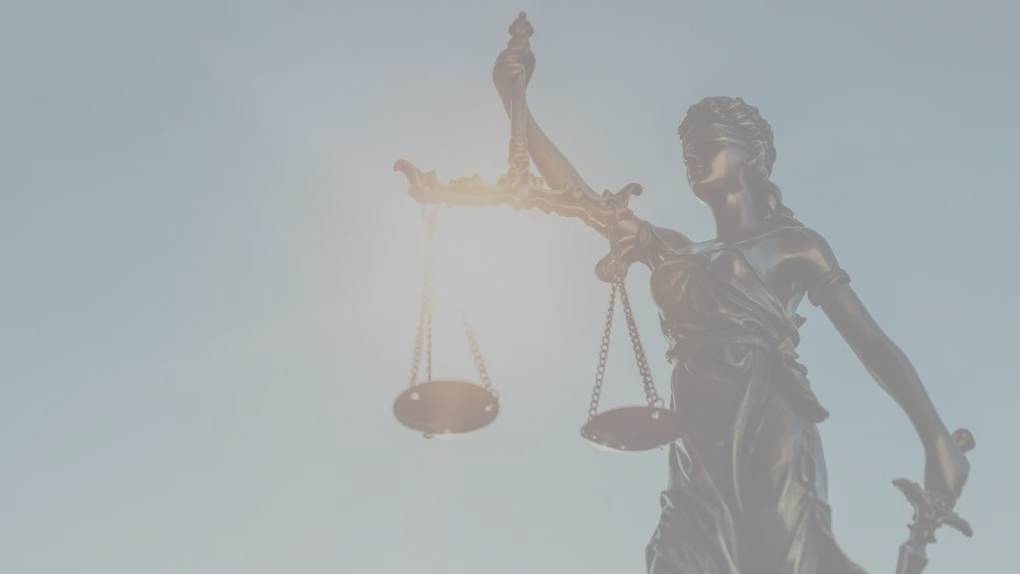
Humans have a fascinating relationship with justice. We clamor for and crave it to be effectuated. But for ourselves? No, no. Give me mercy. I won’t deny that there are times we feel we ought to get what we deserve—if that’s our cheap definition of justice for our present purposes—but when the dust of our actions settles, and we stand on trial for them, there’s no doubt in my mind that the vast majority of us would prefer to swallow the guilt but dodge the hammer.
Disciples of Christ acknowledge their rightful seat in eternal damnation, yet rejoice in the free gift of mercy, no, grace—for if mercy means not getting what you do deserve (hell), then grace is getting what you don’t (heaven). The adulterer, the culprit, the gossiper, the liar, every human, I should say, to one degree or another, hope that guilt be the extent of retribution once caught—that the “mercy of the gods” and the “mercy of thy neighbor” prevails.
How peculiar, then, that when wrongs are committed—not by us, but by others—or when true evil rears its head in the world, it’s justice that sparks hope in us, that brings peace, that restores a sense of balance.
Humanity, despite yearning for mercy (if not grace) for itself, holds justice in equal—if not higher—regard. This is why we praise Christ as the atoning sacrifice who satisfied justice so we could receive grace. But Christ knew firsthand that what the world calls “justice,” or its glaring absence thereof, rarely transpires. People don’t often get what they deserve. In small but poignant ways, tragedy might strike the innocent while serendipity blesses the guilty. On a larger scale, the death of the innocent through war, terrorism, senseless violence, natural disaster, and so forth. Such is the theological problem of pain.
I speak in broad, yet resolute strokes, hoping that the worms in the can I proceed to open may remain at bay.
When tragedy strikes, as we cry out to God for a why, it’s a conspicuously tangible resolution that pacifies. Maybe some good emerges from the ashes, or maybe justice is served to make things “even.” Here, however, is the crux of my concern: Nothing on this earth ever feels truly even. The tyrant who enslaves and murders millions? There’s no retribution that would make his actions “cancel out.” The terrorist who assassinates an innocent life? Even if sentenced to the same fate, it wouldn’t suffice. For if one individual is a far greater one than the other, equal ends are undeniably still unequal. What about those who evade the justice of the law entirely, or those who are complacent, who rally behind evil without directly committing the offense—mustn’t justice and repentance reach them too?
History and no less the present are full of such injustices, leaving us boiling inside over wickedness we can’t control. We call upon God for justice like King David: “O Lord my God, in thee do I put my trust. . . judge me, O Lord, according to my righteousness, and according to mine integrity that is in me. Oh let the wickedness of the wicked come to an end; but establish the just: for the righteous God trieth the hearts and reins” (Psalm 7). I must shatter the illusion, that while God may be denied by some over the injustices of our world, it is without God that any ultimate justice can come to pass—ultimate justice being distinct from the imperfect juridical justice where the scales still feel unbalanced. When evil crops up around us—be it in ideas or actions—at the foundation of our hearts, we must know that ultimate justice will be served, because there is a God. “Lord my god,” this is how “I take refuge in you.” I can’t tell you exactly what ultimate justice looks like, nor can I guarantee we’d like it from our mortal vantage. Just as grace and justice wrestle in our own hearts, they too appear, though in tandem, within our Creator, in whose image we were made. Christ exhibits his advancement of these seemingly contradictory terms in his criticism of the Pharisees, as they “have neglected the more important matters of the law—justice, mercy and faithfulness” (Matthew 23:23).
Justice will be served. So when you’re scrolling online, staring down the abyss of human depravity, or even once you look up and your eyes are still met by the wickedness of the world, take refuge in the knowledge that ultimate judgment awaits; that though matters are out of your control, they are in the hands of Another.
Justice, however, does not often look like peace and inaction (Luke 12:51). King David pursued and demanded justice on earth, yet found sanctuary in the transcendental. Pacifism is not my call. Instead, that we may know that justice delayed is not justice denied.
If such is the case, irregardless of one’s salvation through grace, I’m afraid that you and I too stand upon the scales of justice, and a plank weighs far more than a speck.
Thus, my prayer is that we may both fear and take refuge in justice—ultimate, divine justice.